Research
Science Direct
Cost–benefit analyses of walking and cycling track networks taking into account insecurity, health effects and external costs of motorized traffic
The study presents cost–benefit analyses of walking and cycling track networks in three Norwegian cities. The cost–benefit analyses take into account the benefit of reduced insecurity and the health benefits of the improved fitness the use of non-motorized transport provides. In addition to reductions in health costs, the analyses also take into account that a change from travel by car to cycling or walking means reduced external costs (e.g. air pollution and noise) from motorized traffic and reduced parking costs.
Journal of Public Health Policy
Bicycling for Transportation and Health: The Role of Infrastructure
This paper aims to provide insight on whether bicycling for everyday travel can help US adults meet the recommended levels of physical activity and what role public infrastructure may play in encouraging this activity.
Archives of Internal Medicine
All-Cause Mortality Associated With Physical Activity During Leisure Time, Work, Sports, and Cycling to Work
Physical activity is associated with low mortality in men, but little is known about the association in women, different age groups, and everyday activity. The objective of this report was to evaluate the relationship between levels of physical activity during work, leisure time, cycling to work, and sports participation and all-cause mortality. Results include the finding that bicycling to work decreased risk of mortality approximately 40%. See "Results" for full details.
Bicycling and Walking in the United States: 2010 Benchmarking Report
Quick Facts Sheet: Bicycling and Walking Levels, Bicycle and Pedestrian Safety, Funding for Bicycle and Walking, Public Health and Bicycling and Walking, and Disparities in Biking and Walking Levels, Safety, and Funding.
City of Ottawa, Road Safety: Share the Road
Many collisions occur as a result of road users not sharing their space cautiously and courteously with others. The Integrated Road Safety Program’s Shift to a Nicer Gear-Share the Road campaign aims to make Ottawa’s roadways safer for the pedestrians, cyclists and motorists who use them by raising awareness of road safety issues that relate to how road users use the roadways they share with one another.
Cycling and Health - What's the Evidence?
Cycling England is the independent, national expert body charged by Government with delivering programmes that get more people cycling, more safely, more often. This publication sets out to review the evidence that supports cycling for health and provide a solid platform for action.
Cycling in Cities: Cycling Injuries
Cyclists in North America are 3 times more likely to be killed and 30 times more likely to have serious injuries than cyclists in the Netherlands- a country with strong political and social support of cycling.
"In addition, cyclists in North America are 2 times more likely to be killed and 8 times more likely to have serious injuries than cyclists in Germany, and 3 times more likely to be killed and 30 times more likely to have serious injuries than cyclists in the Netherlands." [Pucher and Dykstra 2003]
Killed by Automobile
NYC Bicycle Fatalities - Who's Responsible?
Two studies from New York City study found driver misconduct to be the principal cause of death in 66% of cases and a contributory factor in 85% of cases. In contrast, only about 15% of fatal cycling crashes were primarily attributable to cyclist error.
Bicycle-Motor Vehicle Collision Locations in the City of Toronto
A 2004 University of Toronto research study commissioned by the City of Toronto confirmed that many sections of Bloor/ Danforth, in particular the Yorkville section, have a disproportionate number of car/bike collisions.
Cycle Helmets
A comprehensive site about cycle helmets, regional legislation, policy issues, and a great deal of research on their efficacy. If you are looking for information about cycling head gear, you are likely to find what you need here. The site boasts a very thorough research paper; Assessing the actual risks faced by cyclists, by Malcolm Wardlaw BSc MBA.
Public Health Agency of Canada
Injuries associated with Bicycles - 2006, Ages 1 year and older
For The Safety of Canadian Children And Youth
CIHI: Canadian Institue for Health Information
Hospitalizations due to Bicycle-Related Injuries Among Children and Youth Down 15% in Five Years
Ontario Trauma Registry Analytic Bulletins | August 2004: Sports and Recreational Injury Hospitalizations in Ontario, 2002-2003
Ontario Trauma Registry Analytic Bulletins | September 2003: Injury Hospitalizations Among Children and Youth in Ontario, 2001-2002
Bike Lanes, On-Street Parking and Business
Author: Fred Sztabinski, Active Transportation Researcher, Clean Air Partnership
Proposals to install bike lanes on major streets are often met with opposition from merchants who fear that the reallocation of road space from on‐street parking to on‐street bike lanes would hurt business. The purpose of this study is to understand and estimate the importance of onstreet parking to business on Bloor Street in the Annex neighbourhood of Toronto.
Bicycle/Motor-Vehicle Collision Study
City of Toronto
In 1997, following a series of fatal traffic collisions involving cyclists, Toronto's Regional Coroner conducted a review of the cycling fatalities in the city over the previous decade. One of the Coroner's subsequent recommendations was that collision statistics should be studied in detail, to help understand and address cyclists' safety issues. In response, in July of 1999, the City of Toronto's Transportation Services Division began a study of collisions between cyclists and motor vehicles. The findings of that study are presented here.
Traffic Safety Facts (2007 Data)
NHTSA
The first automobile crash in the United States occurred in New York City in 1896, when a motor vehicle collided with a [cyclist] (Famous First Facts, by Joseph Kane). More than 52,000 [cyclists] have died in traffic crashes in the United States since 1932 - the first year in which estimates of [cyclist] fatalities were recorded.
Benefits of Bicycling
Cascades Bicycle Club
The humble bicycle is making a 21st century comeback as a clean, fashionable, and inexpensive transportation solution that can help you reduce your city's carbon emissions.
Rural Road Shoulders
Haliburton Highlands Trails and Tours Network.
Smoothly paved shoulders adjacent to the travel lanes can greatly improve conditions for bicyclists along rural highways.
Bicycle facility types and considerations
In determining the type of bicycle infrastructure that would be most appropriate for Haliburton County, it is important to understand the different options that are available, standard design guidelines, and applicability to the local context.
American Society of Civil Engineers
Paved Highway Shoulders and Accident Experience
Accident rates for rural two-lane highways having paved shoulders are compared with accident rates for similar highways having only grass or otherwise unstabilized shoulders. The significantly lower accident rates on paved shoulder highways are utilized to develop numerical values for the dollar amount of accident cost reduction directly attributable to the presence of a paved shoulder.
Pedestrian and Bicycle Information Center
Paved Shoulders
The AASHTO Guide for the Development of Bicycle Facilities notes that in rural areas "adding or improving paved shoulders often can be the best way to accommodate bicyclists" and they have the additional attraction of providing a variety of benefits to motorists and other road users as well.
Grey County: Paved Shoulder Policy
The Committee requested that a paved shoulder policy be developed after report TAPSR-116-08 was adopted by Committee and County Council in 2008. The report compared the costs of gravel and paved shoulders illustrating that over a period of fifteen (15) years, paved road shoulders are less costly to install and maintain than gravel shoulders. Paved shoulders are also safer for the travelling public.
At the Frontiers of Cycling
Policy Innovations in the Netherlands, Denmark, and Germany
Bicycling Boom in Germany
A Revival Engineered by Public Policy
Cycling Safety on Bikeways vs. Roads
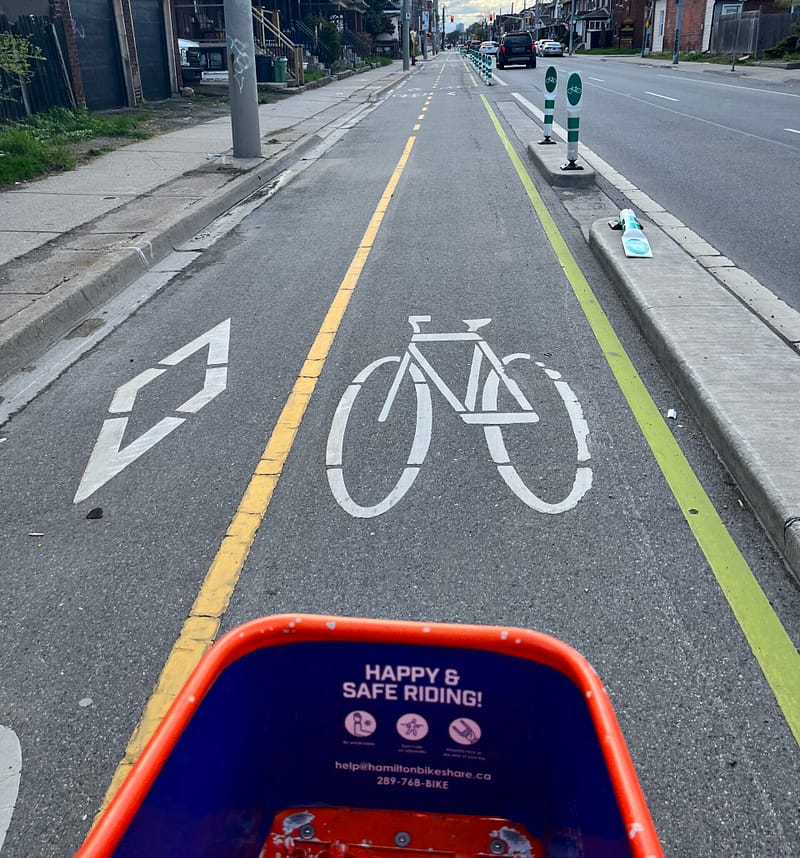
Although some say that cycling in mixed traffic is safer than bike lanes or bike paths, John Pucher shows that cycling is much safer and more popular precisely in those countries where bikeways, bike lanes, special intersection modifications, and priority traffic signals are in place for cyclists.
Cycling Trends and Policies in Canadian Cities
Bicycling accounted for an average of 1.2% of work trips in Canada in 2001, but with considerable variation by province and metropolitan area. In this study, we chose six Canadian cities for detailed analysis of their cycling trends and policies: Montreal and Quebec City in Quebec; Ottawa and Toronto in Ontario; and Vancouver and Victoria in British Columbia.
Making Cycling Irresistible
Lessons from the Netherlands, Denmark and Germany
Making Walking and Cycling Safer
Lessons from Europe
Slideshow: Cycling for Everyone
The Key to Public and Political Support
Slideshow: Promoting Safe Walking and Cycling to Improve Public Health
Socioeconomics of Urban Travel
Evidence from the 2001 NHTS
Why Canadians Cycle More than Americans
A Comparative Analysis of Bicycling Trends and Policies
Air Pollution Burden of Illness from Traffic in Toronto
Problems and solutions from Dr. David McKeown - Toronto Medical Officer of Health
Cycling Will Improve Environment and Health
The Danish Ecological Council has carried out a comprehensive literature study on health, physical exercise and cycling. The resulting data has enabled the Council to make a cost-benefit analysis on cycling initiatives taking into account also the positive health aspects from cycling.